



Managing screen time: finding the right balance
21 October, 2026
“Just five more minutes!” In many homes, the screen-time negotiation starts up again every evening. Tablet, TV, gaming console, phone: screens are part of family life, and that's normal. They help us learn, create and stay in touch with Grandma. So the challenge isn't to ban them, but to give them the right place. Here's what pediatricians recommend, along with a few practical strategies for finding balance without turning every evening into a tug-of-war.
What pediatricians recommend
The Canadian Paediatric Society offers guidelines by age:
- Under age 2: no screen time, except video calls with loved ones
- Ages 2 to 5: no more than one hour a day of regular or sedentary screen time
- School-age children and teens: no universal number. Instead, pediatricians advise setting limits that suit each child, as part of a family plan.
One rule applies at every age: avoid screens for at least an hour before bed, since they can interfere with sleep.
Quality matters as much as quantity
An hour spent creating an animation or video-chatting with a cousin isn't the same as an hour of videos rolling by on their own. Choose content that's age-appropriate, interactive or creative, and watch it with your child whenever you can. These moments are great conversation starters: what did they like, what surprised them? On YouTube and other platforms, pick the videos ahead of time and turn off autoplay, which often turns ten minutes into an hour.
Screen-free zones and times
Rather than constantly keeping an eye on the clock, set times and places where screens simply don't belong. For example:
- family meals;
- the hour before bed;
- the bedroom;
- short car rides, perfect for chatting.
Also turn off the TV when nobody's watching, rather than leaving it on in the background. These rules take less negotiating than a time limit because they're clear and apply to everyone.
A family plan made with the kids
Pediatricians recommend having a family media plan. The idea is simple: decide together when, how and where screens are allowed. Sit down with the kids, listen to their arguments and write the rules on a sheet of paper to post on the fridge. A child who helped make the rules is often much less likely to challenge them! Also plan for the end of screen time: a visible timer helps younger kids get ready for it. Review the plan at the start of every school year, since a 7-year-old's needs are obviously not the same as a 14-year-old's.
Leading by example
Kids copy what they see far more than what they're told. If your phone is on the table at dinner, the no-screens-at-meals rule quickly loses its power. Follow the same screen-free zones yourself, and put your device away during games and homework. When you do need to use it, say why: “I'm checking the weather to see if we need our boots.” That way, your child understands that a screen serves a purpose, and that you put it down when you're done.
Aim for balance, not perfection
A sick day with the flu or a long road trip with more screen time than planned isn't a failure. Look at the week as a whole instead. Is your child getting enough sleep? Moving every day? Seeing friends and keeping up at school? If the answer is yes, you've probably found a good balance. If not, go back to your family plan and adjust one rule at a time. The goal isn't to count every minute, but to keep screens in their place.
Put these tips into practice
Get the whole family organized with Octave
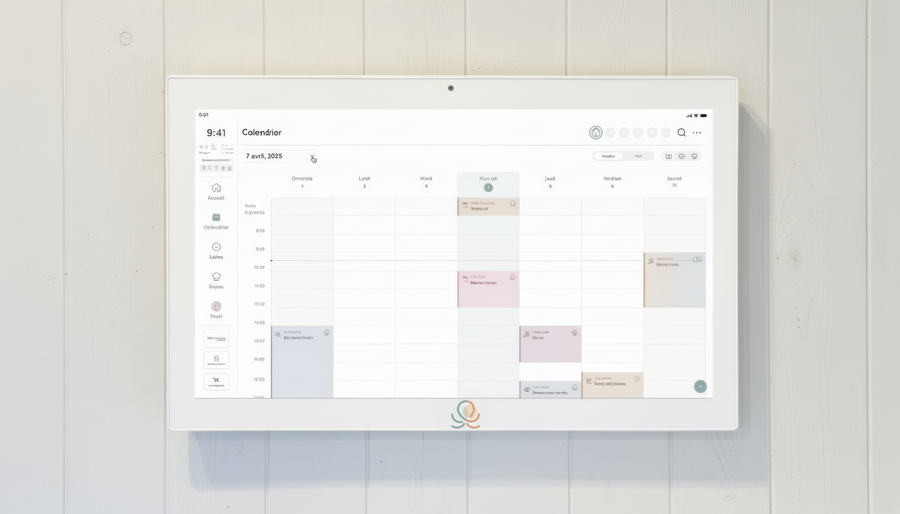
Meals, chores, the calendar and routines for the whole family in one place: on everyone's phone and on the Station on your wall.
The app is free on iOS and Android.